AKA Learning to spot Misinformation.
Misinformation is difficult to combat because it often isn’t obvious that it’s false. Two tools that approach the problem differently are the News Literacy Project’s RumorGuard and the game Bad News. Both try to teach people to recognize misinformation, but they do this through different kinds of interaction.
RumorGuard
RumorGuard is a collection of real examples of viral misinformation. Users can browse recent rumors or choose topics such as politics, artificial intelligence or natural disasters. Each entry shows the original claim, explains what is false or misleading about it, and walks users through five credibility factors: Source, Evidence, Context, Reasoning and Authenticity.
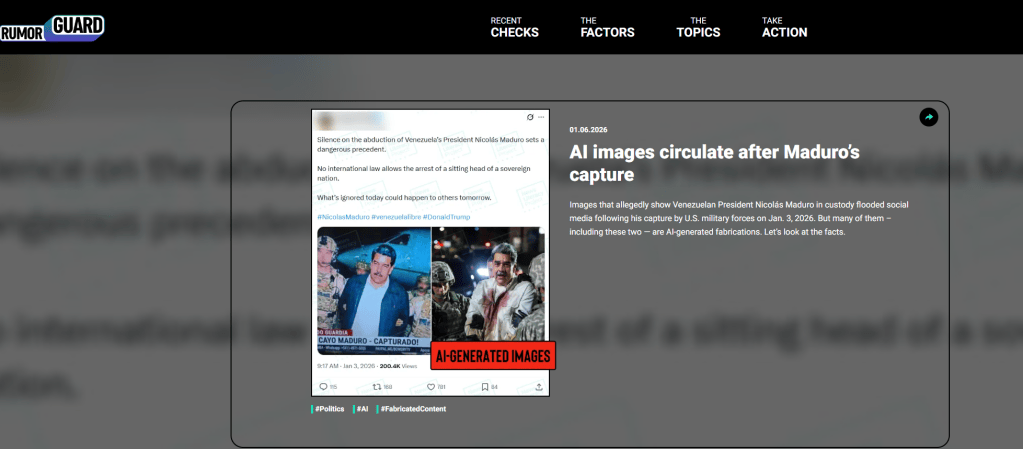
What I liked about RumorGuard is that it shows that someone could determine that a piece of media is false for themselves. I.E., the Authenticity and Evidence checks can show whether an image or video has been manipulated by A.I. or taken out of context. This makes the tool more educational than your average fact checking database in my opinion. I didn’t particularly enjoy the layout or U.I., but usefulness trumps aesthetics and preferences in this case. I think this site has potential.
The biggest issue I can see with it is that users are mostly learning from examples that have already been investigated without a clear showing of how they came to this conclusion. RumorGuard could teach useful habits, but people still need to transfer those habits to new content they consume.
Bad News
Bad News takes almost the opposite approach. The player learns to become a fake news mastermind. The goal is to build followers and credibility for your news site. This is done by using the misinformation techniques of impersonation, emotional manipulation, polarization, discrediting opponents, conspiracy theories and trolling.
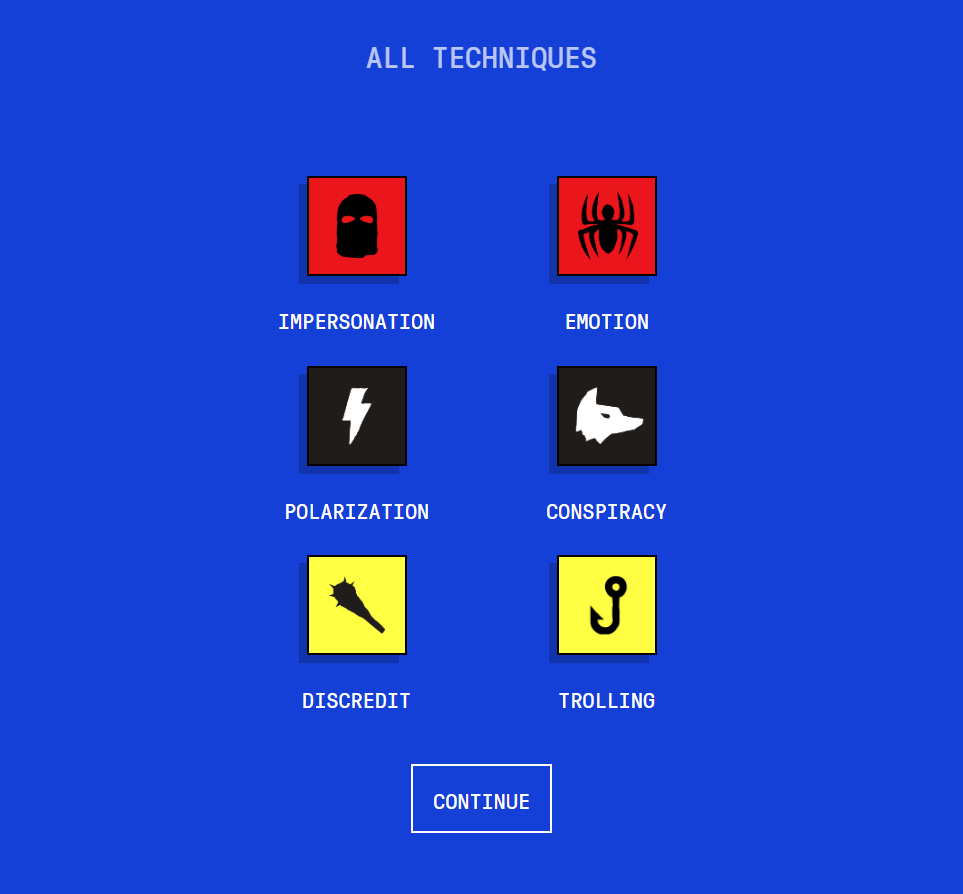
This approach seems more effective because it turns misinformation into something the player has to construct. It took me a few tries to get into the headspace of a bad actor, and really showed me some techniques that I had not previously known. This game helps players see why those techniques are attractive to someone trying to gain attention. Research on Bad News has found that playing the game can improve people’s ability to recognize misinformation techniques, with the possibility of these effects lasting for months. (Roozenbeek et al., 2024)
Overall, I think interactive tools and educational games are promising because they make people practice their media literacy skills. They can make abstract concepts more digestible and allow people to experience how misinformation works. At the same time it is important to realize that no game or fact checking website can eliminate misinformation obviously. The proper approach in my opinion is to introduce this practice with repeated exposure, starting in middle school English class. The more informed the average person is on these skills the better off society will be as a whole.
References
Hopefully this helps prove I’m not spreading Misinformation on this post.
Rumorguard from the News Literacy Project. RumorGuard from the News Literacy Project. (n.d.). https://www.rumorguard.org/
Play the fake news game!. Bad News. (2024, July 24). https://www.getbadnews.com/en
Roozenbeek, J., Linden, S. van der, & Nygren, T. (2024, November 22). Prebunking interventions based on the psychological theory of “inoculation” can reduce susceptibility to misinformation across cultures.: HKS Misinformation Review. Misinformation Review. https://misinforeview.hks.harvard.edu/article/global-vaccination-badnews/

