How I Verified a Claim About a Congressman Surviving a Plane Landing in a Lake.
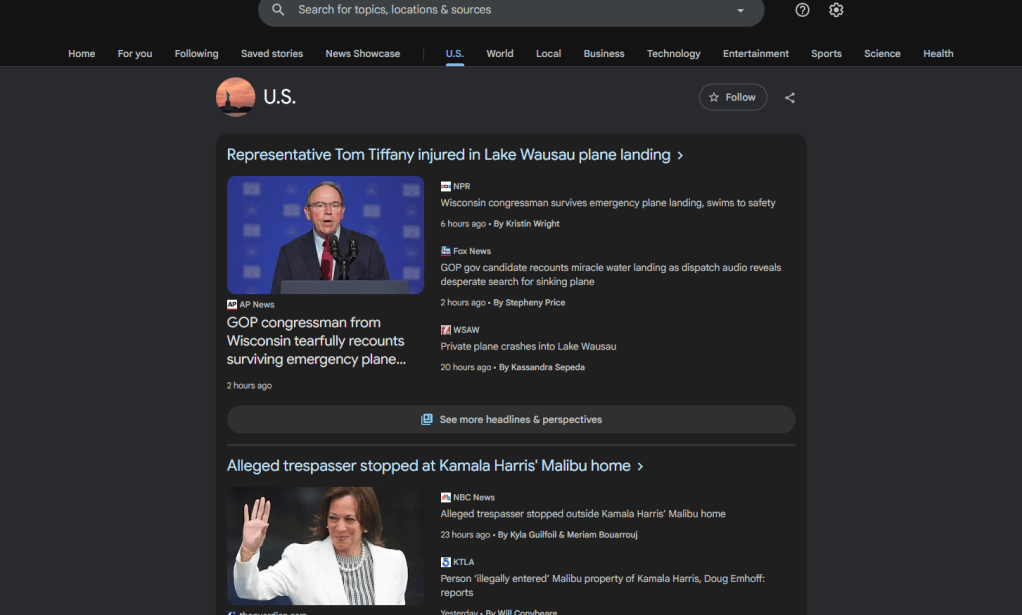
I decided to evaluate the claim that a Wisconsin congressman survived an emergency plane landing in Lake Wausau Wisconsin and swam to safety. I saw the story on a Google News results page. The page showed headlines from several major news organizations, including AP News, Fox News, and NPR.
The headline immediately caught my attention because it described an unusual and dramatic event that also involved a public official. Claims involving plane crashes, politicians, and survival stories are always worth verifying because dramatic headlines can encourage people to share information before they understand the full story. Here are my steps:
Step 1: Identify the Claim
The first thing I did was separate the specific claim from the emotional of the headline. Was the claim that a plane had landed in a lake? Crashed in to a lake? Was a Republican congressman involved? Had he “survived” or was it such a minor incident that the word “survived” is only used for the emotional response? Was he able to independently swim to safety as implied by the headline?
Breaking the claim into smaller parts made it easier to evaluate what information would need to be confirmed.
Step 2: Use Lateral Reading
Rather than immediately accepting the first article, I used lateral reading. This means leaving the original page and checking what other reliable sources say about the same event. The Google News page was useful because it displayed reporting from multiple organizations instead of requiring me to rely on only one source.
The results included AP News and NPR, both of which had headlines describing a Wisconsin congressman surviving an emergency plane landing and swimming to safety. Fox News had a similar headline, though it had buzzwords such as “miracle” and “desperate”. Seeing the same basic event reported independently by multiple established news organizations made the claim more credible. There were different facts reported between the different news organizations.
Step 3: Search for Coverage
Next, I searched the central details of the story separately rather than just searching for the exact headline. I used terms such as “Wisconsin congressman Lake Wausau plane emergency landing” and “Tom Tiffany plane lake Wisconsin.”

This helped me determine whether the story appeared across all the major news sources and whether the details remained consistent, which they did for the most part. Searching the key facts instead of copying the original headline is important because it reduces the chance of being trapped with one framing of the event.
Step 4: Compare the Details
After finding multiple sites providing coverage, I compared the important details. I looked for consistency regarding the congressman’s identity and position, the location of the landing, the type of emergency, and how the person escaped the aircraft.
The main differences I found was that first responders had mentioned it being a crash with about 10 seconds warning. The stories mention that he swam to safety, which is technically true however he only swam until he could reach the bottom of the lake on a sandbar then waited for rescue from there.
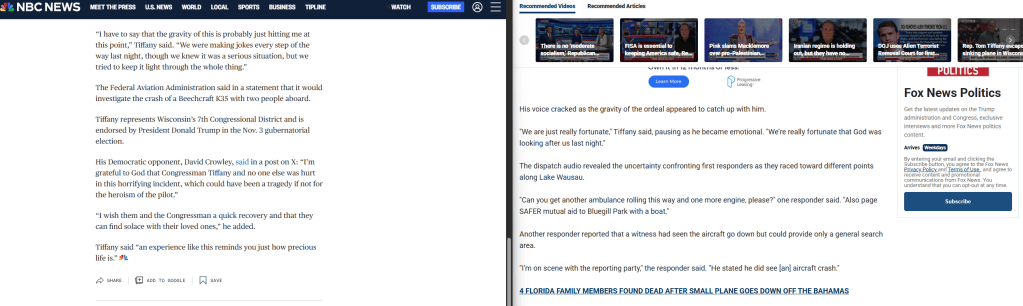
This is an important part of verification because two headlines can appear to confirm each other while actually describing different events. “Crashed into a lake,” “made an emergency landing,” “swam to a nearby sandbar,” and “swam to safety” communicates different levels of severity. I wanted to see if the wording of different sources accurately reflected what happened, or if it was exaggerating the event.
Step 5: Evaluate the Sources
I also considered the credibility of the sources. AP News, Foxs News, and NPR are established news organizations with editorial standards and reputations for reporting breaking news. However, I did not assume that because of their history they could be trusted. I looked for whether the articles identified witnesses, officials, emergency responders, or other direct sources.
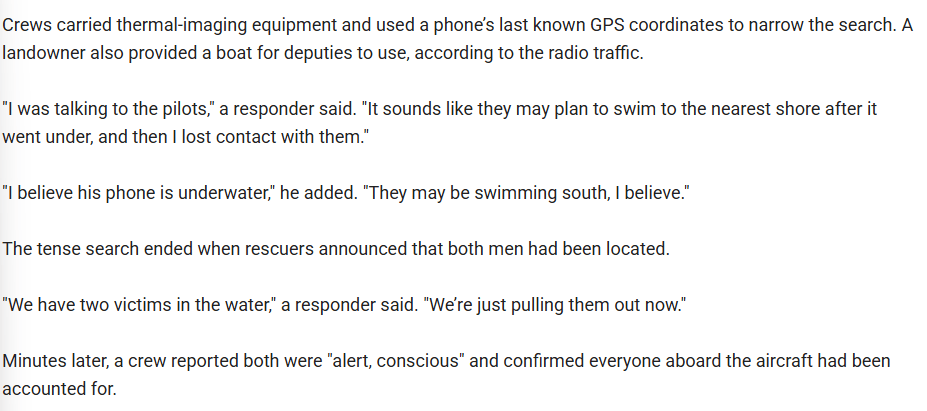
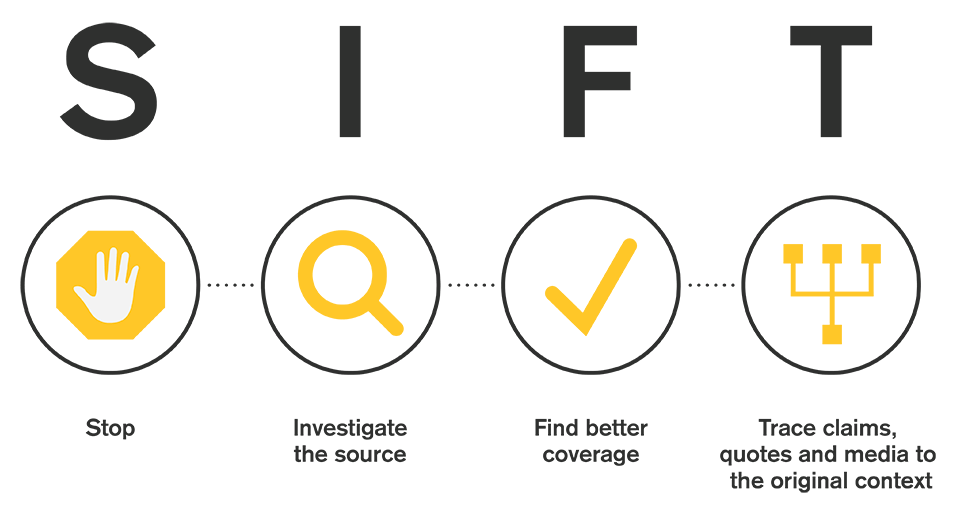
This follows the SIFT approach because it involves investigating the source and checking whether the reporting is supported by evidence. A trustworthy source can still make mistakes, especially during a developing event, so it is important to be able to distinguish between confirmed facts and early reports.

Step 6: Conclusion
Based on the available reporting, the claim appears to be credible. A variety of established news organizations reported the same event: a Wisconsin congressman survived an emergency plane landing in Lake Wausau and reached safety. I would still be careful about repeating dramatic details that are not directly supported by the articles I reviewed without further information, as this is a still developing story. The claim became credible in my eyes because I was able to identify the exact statements, check multiple sources, compare the details, and consider the evidence.
This process reminded me why verification is especially important when a claim is surprising, emotional, or likely to garner a large amount of attention. A dramatic headline can make people feel as though they need to share news immediately. The SIFT and lateral reading approach provides an easy way to evaluate information without requiring someone to become an expert in the matter.


Leave a comment