Have you ever watched one video about a subject and then suddenly noticed that your entire social media feed seems to be about that subject? I’m dealing with this right now. I recently started a new job, which has got me researching various home improvement products. This has lead to my TikTok FYP doing its best interpretation of the show “This Old House”.
Maybe you watched one video about a fad diet, a political scandal, or stayed a little too long on a video about a strange conspiracy theory. Suddenly, TikTok, YouTube, Instagram, or insert your social media of choice here… starts showing you more and more content about that topic. It can almost feel like your phone knows what you are thinking. And I know I’m not the only one who has thought” I know I was just thinking about this, but I swear I didn’t say it out loud.”
Social media platforms use highly advanced algorithms to decide what content you are most likely to interact with or watch. These systems are designed to personalize your experience, for the better or worse. Lets be real, they are also designed to maximize the profits of the capitalist class. One of the side effects of that is they also create an environment where misinformation can spread globally at nearly the speed of light.
Always remember just because a Social Media site is feeding you this info, that doesn’t mean that its true, or good for you.
So, What is an Algorithm?
An algorithm is basically a set of instructions that a computer system uses to process information and make decisions. Social media platforms use complicated recommendation systems to decide which posts, videos, and accounts to show you.
YouTube, for example, says its recommendation system uses many different signals, including clicks, watch time, likes, dislikes, shares, and survey responses. TikTok similarly explains that its recommendations can be influenced by things such as videos you like or share, comments you make, accounts you follow, and how long you watch a video.
This means that your feed is not simply a chronological list of everything posted by the people you follow, like the good old days of Myspace. It is being constantly organized and personalized based on information about your behavior.
So when you get distracted from your distraction and let that TikTok video play through a dozen times, your algorithm is skewed and screwed. Or more likely they account for that and give rewatches less weight after a certain point.
Engagement is Key
Social media platforms have a nearly infinite amount of content available. They obviously can’t show users everything, so these systems have been put in place to make choices about what content to put in front of you.
Engagement includes:
Clicking on a video
Watching a video for a long time
Liking a post
Commenting
Sharing
Following an account
Rewatching a video
This is where misinformation can fester and ooze. Imagine, if you will, that you see two videos about…lets say a political issue. The first video calmly explains the issue for a couple minutes. The second video has a dramatic thumbnail and a title that says, “THEY DON’T WANT YOU TO KNOW THIS!”
Which one are you more likely to click?
If you click the second video and watch most of it because it makes you angry, surprised, or curious, the system does not necessarily know why you watched it. It just knows that the video had your attention.
YouTube itself says that signals such as clicks and watch time are used to help make recommendations. But for things as important news and public information they also take quality and other factors into consideration. This means that the modern algorithms for recommendations have some amount of nuance.
The issue is that misinformation can generate a lot of engagement.
Misinformation Can Be Interesting
A false claim might be so surprising you just have to watch. A misleading headline might be there just to make people angry. A conspiracy theory might make someone curious enough to sit through an entire video. A dramatic post might cause people to argue with each other in the comments.
That last one has been all over my Facebook for like two weeks now. I will say when you are part of a niche subculture, a little drama can go a long ways.
Imagine a certain someone who is in a musical duet of sorts makes a post saying that the group is dissolving. These two are known jokesters, who people have learned to not take at face value. They had mastered the subtle art of Kayfabe. Folks who believe the claim share it because they think other people need to know. People who don’t believe it share it because they want to criticize it. A huge amount of people jump headfirst into that comment section just to argue.
The original creator has now received a lot of attention from people on both sides. In a community of around 10,000 people by my best estimates, it spreads like wildfire.
In this particular case the general post about disbandment was true. However the details were murky enough that other peoples posts on the subject blatantly spreading misinformation had many more views than the original post.
No Distractions Back to The Algorithm!
My bad!
The algorithm does not necessarily know if all of those reactions are related to the accuracy of the post. All it knows is that people were interested in the content.
This gives the content more opportunities to reach additional users.
This is one reason it is important to separate popularity of a piece of content from it’s credibility.
So remember kids! A video with two million views is not necessarily more accurate than a video with 200 views.
A post with 50,000 comments has most definitely not been fact checked 50,000 times. Maybe not even a fraction of that. And an account with millions of followers is not automatically an expert.
You Gotta Slow Down
Don’t fret, we aren’t to the point of bowing to our A.I. overlords just yet. Though now that I think about it there are a few things in common between A.I and “Ti” and “Do” of Heavens Gate fame. If your A.I agent insists on you wearing Nikes you might want to pull the cord on it.
Slow Down! If a post makes you feel your emotions, that’s a good sign to stop and think before reposting.
Check That Source
What is the source? Who originally made the claim? Are they an expert? Are they providing evidence? Is the information coming from an actual news organization, a university, or another credible source? Are they trying to convince you that a UFO will be disguised as the Halle Bopp comet and it will be coming to usher you to heaven? Are they telling you that you physical form is a vessel to be discarded? Be careful out there.
As an aside if you are interested in Cults or just want to see a very 90’s website https://www.heavensgate.com/ is still active and maintained by two of the “home Team” members. Trigger warning though, the “Away Team” didn’t have a happy ending.
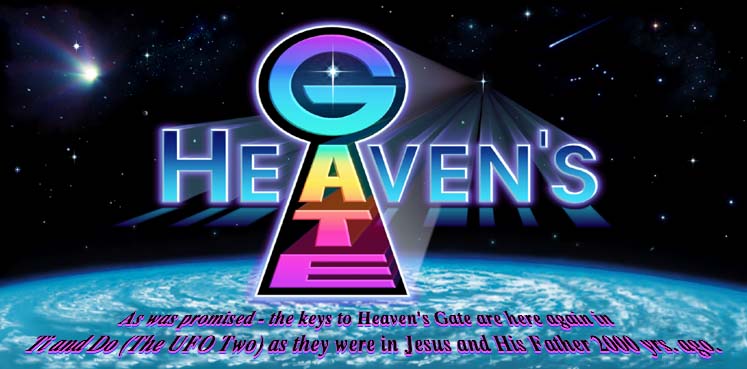
Image source: Heaven’s Gate Official Website
Sweat The Technique
You can also use an ancient technique taught to us way back in the 90’s called lateral reading. I don’t remember the first time I was taught this technique, but it was how my classmates and I were taught to use the internet in Elementary School. This was before search engines were very good. In fact I thought AskJeeves.com would forever be the best Search engine until my uncle, who was in College at NAU at the time showed me Dogpile. Oh yeah the technique!
Instead of staying on the original website or social media post and trying to judge its trustworthiness using only your brainpower, open another tab and search up what, if anything, other sources say about the claim. Get yourself more perspective!
Research from Stanford found that professional fact checkers were much more likely than students and historians to use this approach. If everyone became masters of this art misinformation would stand no chance.
Back To Basics
The next time a video appears on your feed and has thousands of likes, millions of views, and hundreds of comments, take a second to run through these Questions.
Who is making this claim?
Is there evidence to support it?
What do other reliable sources have to say?
Am I seeing this because it is true?
A healthy dose of skepticism can make a big difference.
Sources
The Guardians article on TikToks Algorithm
Facebooks Explanation on content distribution
How Youtube Recommendations work
https://www.instagram.com/thewxldthxngkxng


Leave a comment